About:
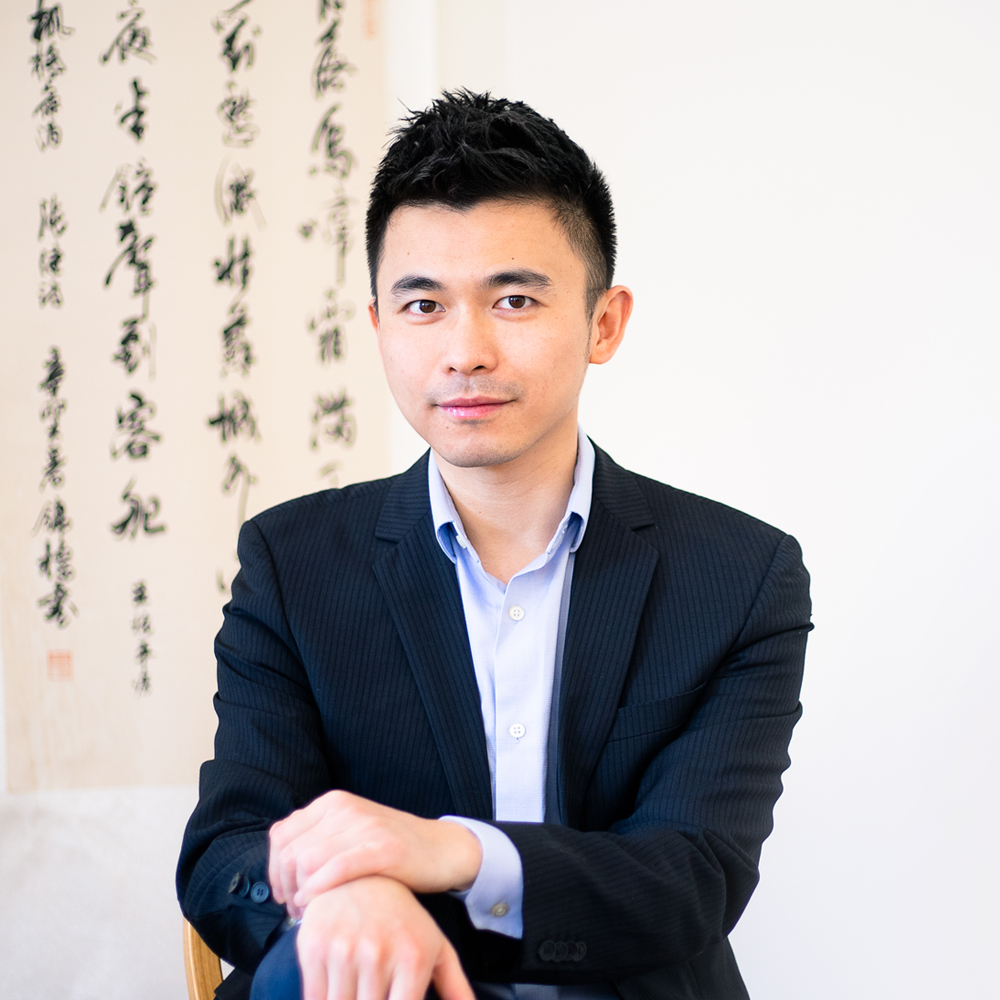
Hangping Xu is Assistant Professor of Chinese Cultural Studies and, by affiliation, Comparative Literature at the University of California, Santa Barbara, and previously taught at Middlebury College. He holds a Ph.D. in Chinese Literature from Stanford University, with a Ph.D. minor in Gender and Sexuality Studies and extensive coursework in Digital Humanities. His teaching has been recognized with Stanford’s Centennial Teaching Award. Comparative and interdisciplinary in orientation, his research interests include modern Chinese literature and popular culture, Asian American literature, theories of world literature, film and new media studies, literary theory, and critical AI studies. He has produced groundbreaking scholarship that brings crip critique to modern Chinese literary and cultural studies. His work in disability studies received the Irving K. Zola Award for Emerging Scholars in Disability Studies (Honorable Mention) in 2020. His first book, Crip China: Ablenationalism and Disability Aesthetics, is forthcoming in 2026 with De Gruyter Brill. His publications have appeared or are forthcoming in venues including Modern Chinese Literature and Culture (MCLC), Frontiers of Literary Studies in China, PRISM: Theory and Modern Chinese Literature, Critical Multilingualism Studies, Chinese Literature Today, International Comparative Literature, Queer Literature in the Sinosphere, Chinese Poets Since 1949 (Dictionary of Literary Biography), The Oxford Handbook of Modern Chinese Cultural History, and A Global History of Literature and the Environment (Cambridge University Press).
He has guest-edited two journal special issues. With Yunte Huang, he co-edited Translatability and Transmediality: Chinese Poetry in/and the World, published in 2023 in PRISM: Theory and Modern Chinese Literature; the introductory essay advances a transmedial approach to Chinese poetry with particular attention to translation and world literary circulation. With Elise Huerta, he co-edited a 2018 special issue of Chinese Literature Today that introduces Yu Xiuhua’s poetry to a wider readership through such lens as disability studies, gender studies, and internet culture. He is among the earliest translators of Yu Xiuhua’s poetry; 12 poems by Yu that he co-translated are included in that issue. He is also developing a collaborative project with Thomas Mazanec and Xiaorong Li, The Worst Chinese Poetry: A Critical Anthology, which features “bad” poems (歪诗) alongside commentary that reconstructs the literary, social, and political histories of their “badness.”
He is currently working on two new book projects. First, World Literature Made in China examines contemporary Chinese literature within a global system of recognition by analyzing prize-winning writers such as Mo Yan, Liu Cixin, Hao Jingfang, Gao Xingjian, Yang Lian, and Yu Xiuhua. Combining close reading with comparative and sociological accounts of literary value and cultural legitimacy, the project explores how Chinese literature travels, is translated, and is institutionally recognized as “world literature.” Second, Toward a Theory of AI-Generated Literature examines the aesthetics and politics of AI-generated literature from East Asia. Situating literary production within larger geopolitical narratives of AI—especially accounts shaped by U.S.–China rivalry—it treats AI as a contested and transnational site of knowledge, power, and culture. By placing East Asian AI literary production in dialogue with Euro-American literary institutions, translation platforms, and pedagogical practices, the project intervenes across literary theory, media studies, critical AI studies, and world literature.
Selected publications include:
- “Crossing the World to Sleep with You: Yu Xiuhua’s Poetry as Performance and Its Cross-Cultural Translatability,” Prism: Theory and Modern Chinese Literature (2023) 20 (1): 225–247
- “Beyond National Allegory: Mo Yan’s Fiction as World Literature,” Modern Chinese Literature and Culture, vol. 30, no.1 (Spring 2018), pp. 163-89
- “Rescuing Nature from the Nation: Ecocritical (Un)Consciousness in Modern Chinese Culture,” A Global History of Literature and the Environment, 2017, Cambridge University Press
He has supervised or is currently supervising doctoral dissertations on topics including self-translation, disability aesthetics, the cultural history of labor, new media studies, and Afro-Chinese cultural politics. His Ph.D. advisees have secured postdoctoral and faculty positions at Harvard University, the University of Texas at Austin, and Grinnell College. He also makes an effort to bring his humanistic knowledge and training to engage with the public. His public-facing work was featured in the UC Television and BBC.
Courses Taught:
CHIN 167: Queer China, Crip China; CHIN 40: Chinese and Global Popular Culture; CHIN/CLIT 82: Modern Chinese Literature and Film; CHIN 176: Chinese Cinema: Nationalism and Globalism; INT 36KX: Disability Aesthetics and Politics in Chinese Literature and Western Music; CHIN 263: World Literature and Modern China; EACS 4B: Modern East Asian Cultures
Professor Xu’s courses are taught in English, with materials provided in English translation. For a glimpse of his classroom, prospective students can watch a video by former student Christian Aceves, created as a final project reflecting on his learning experience in Professor Xu’s film course. Recognizing evolving notions of literacy, Professor Xu also incorporates alternative assignments alongside traditional academic papers, including podcast conversations, TikTok-style videos, and creative writing.