Recent News

Event: Animism Today on 10/21-22

Next Monday and Tuesday (October 21 and 22) four prominent scholars from Japan will come to UCSB to address the topic of “Animism Today” in popular culture, traditional culture, and contemporary arts, also in conversation with members of the UCSB community. The term “animism” is used in Japan with positive connotations as a way to describe widespread forms of Japanese religiosity and, to an extent, Japanese cultural identity.
For full information, please see the event page on the Religious Studies website.
At Rob Gym Room 1005 (in the low building to the left before the entrance to Rob Gym).
Monday afternoon features four papers addressing various aspects of animism by Hirafuji Kikuko, MInato Chihiro, Koizumi Bon, and Matsumura Kazuo. See the program below for more information.
On Tuesday, there will be eight brief presentations by UCSB colleagues:
9:30–12:00 Roundtable Rethinking “Animism” and Related Phenomena (“paganism,” polytheism, idolatry, materiality of religion, secularization, etc.)
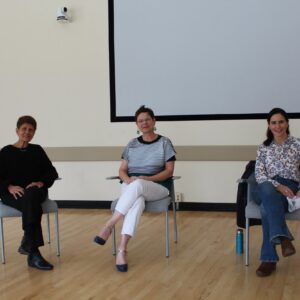
We will have presentations from Claudia Moser (History of Art and Architecture), Amit Shilo (Classics), Ranjani Atur (Ph.D., Religious Studies UCSB; Classics, University of Minnesota); and Rudy Busto, Thomas Carlson, Will Ellison, Fabio Rambelli, and Christine Thomas (all from Religious Studies)
Organized by Kikuko Hirafuji (Kokugakuin University), Fabio Rambelli, and Christine Thomas (UCSB).
Sponsors:
Research Center for Advanced Science and Technology Open Laboratory for Emergence Strategies (ROLES), The University of Tokyo
Kokugakuin University (Tokyo)
UCSB Virgil Cordano OFM Chair in Catholic Studies
UCSB International Shinto Foundation Chair in Shinto Studies
UCSB Department of Religious Studies
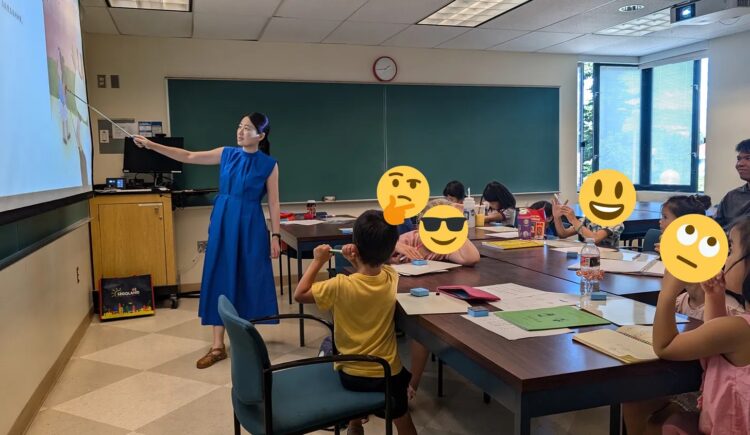
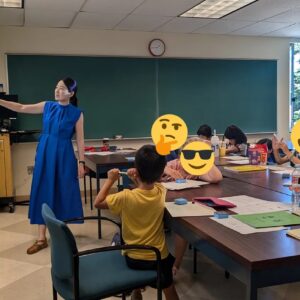
A Chinese teacher in a blue dress gestures at a screen at the front of a classroom as several young students look on.

Announcing Partnership with Santa Barbara Chinese School, Internship Opportunities

A Chinese teacher in a blue dress gestures at a screen at the front of a classroom as several young students look on.

We’re excited to welcome young Chinese-language learners to our building on the weekends through our partnership with Santa Barbara Chinese School!

Founded in 1985, the Santa Barbara Chinese School promotes the teaching of Chinese language and culture to students from pre-K through high school. It offers the only formal, in-person classes in Chinese language for young learners in Santa Barbara County. They offer a variety of opportunities to learn and improve one’s Chinese language abilities, including classes on the weekend and more informal meetings throughout the week. Please visit their website for more details (Fall 2024 schedule can be found here).

UCSB students may also volunteer for Santa Barbara Chinese School and receive UCSB credit through our internship program. Please visit their website and fill out their volunteer form for more information.

Prof. Thomas Mazanec Appointed East Asia Editor of JAOS

Prof. Thomas Mazanec was recently appointed to serve as the East Asia section editor of JAOS (Journal of the American Oriental Society). Founded in 1842, the AOS is the oldest learned society in the United States devoted to a particular field of scholarship, and its associated Journal is known as one of the premiere publications in the study of premodern Asia and North Africa.

The first issue for which Prof. Mazanec served as editor (144.3) is now online.

Prof. Howard Chiang Publishes New Book

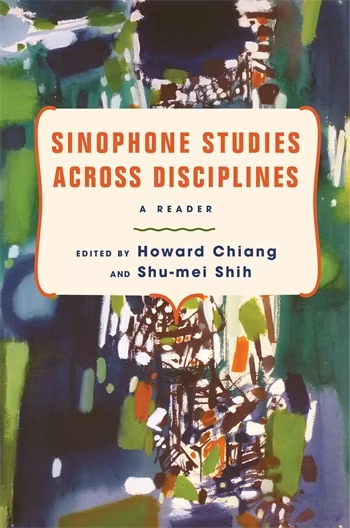
Prof. Howard Chiang, the Lai Ho & Wu Cho-liu Endowed Chair in Taiwan Studies, has a new book out—Sinophone Studies across Disciplines: A Reader, edited with Shu-mei Shih, from Columbia University Press. Congratulations!

Description

Sinophone studies—the study of Sinitic-language cultures and communities around the world—has become increasingly interdisciplinary over the past decade. Today, it spans not only literary studies and cinema studies but also history, anthropology, musicology, linguistics, art history, and dance. More and more, it is in conversation with fields such as postcolonial studies, settler-colonial studies, migration studies, ethnic studies, queer studies, and area studies.

This reader presents the latest and most cutting-edge work in Sinophone studies, bringing together both senior and emerging scholars to highlight the interdisciplinary reach and significance of this vital field. It argues that Sinophone studies has developed a distinctive conceptualization of power at the convergence of different intellectual traditions, offering new approaches to questions of plurality, hierarchy, oppression, and resistance. In so doing, this book shows, Sinophone studies has provided valuable conceptual tools for the study of minoritized and racialized communities in diverse global settings. Essays also consider how the rise of China has affected Sinophone communities and the idea of Chineseness around the world, among other timely topics. Showcasing cross-fertilization and diversification that traverse and transcend conventional scholarly boundaries, Sinophone Studies Across Disciplines gives readers an unparalleled survey of the past, present, and future of this inherently interdisciplinary field.

Table of Contents

Introduction: Sinophone Studies Across Disciplines, by Howard Chiang and Shu-mei Shih
Part I: Interdisciplinary Conjunctions
1. The Question of Chinese Empire, by Shu-mei Shih
2. Stonewall Aside: When Queer Theory Meets Sinophone Studies, by Howard Chiang
3. Written Out: Dance and the Sinophone, by Emily Wilcox
4. Cantonese Opera and Sino-Soundscape in North America, by Nancy Yunhwa Rao
5. Ann Hui, Hainan, and the Sino-Vietnamese War: A Sinophone Inter-Asian Recasting of Boat People’s Transpacific Refugee Critique, by Brian Bernards
6. Sinophone Affects: Kyle Dargan’s Anagnorisis and the Poetics of Infrastructure in Chan Tze Woon’s Yellowing, by Lily Wong
Part II: Theories, Methodologies, Controversies
7. Geocritical Sinophone and Transgressive Community, by Yinde Zhang
8. Sinophone Postloyalism, by David Der-wei Wang
9. Parasite: Conceptualizing a Sinophone Approach and Ethics, by E. K. Tan
10. Queer Hong Kong as a Sinophone Method, by Alvin K. Wong
11. Enjoy Your Sinophone!, by Chien-heng Wu
12. The Lure of Diaspora and Sinophone Malaysian Literature in Taiwan, by Wai-Siam Hee
13. Conditions of Theory in Taiwan: Americanism and Settler Colonialism, by Shu-mei Shih
Part III: Places of Differentiation
14. Chinese Settler Colonialism: Empire and Life in the Tibetan Borderlands, by Carole McGranahan
15. Beyond Musical, Political, and Linguistic Boundaries: The Influence of the Hong Kong Rock Band Beyond in the PRC in the 1990s and Its Legacy, by Nathanel Amar
16. Translanguaging as a Transcultural Marker in the Italian Sinophone Play Tong Men-g, by Valentina Pedone
17. From Multilingualism to Mandarin: Chinese Singaporeans as a Sinophone Community, 1945–1990, by Jason Lim
18. Adaptation and Identity Building Among the Ethnic Chinese Communities in Vietnam: A View from Ritual Transformation in Popular Religion, by Tho Ngoc Nguyen
19. The Misconstrued Reader: Contemporary Sinophone Literature in Thailand, by Rebecca Ehrenwirth
Contributors
Index

Yoko Yamauchi Elected President of the Board of the Teachers of Japanese in Southern California

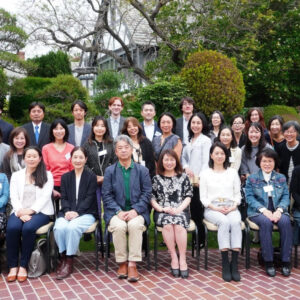
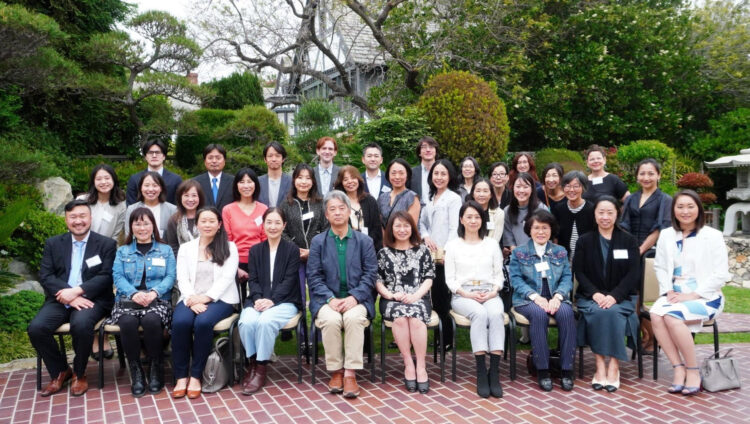
Congratulations to Yoko Yamauchi, UC Santa Barbara’s Japanese Language Program Coordinator, who has been elected President of the Board of the Teachers of Japanese in Southern California (TJSC)! On June 1, Yamauchi (front row, 4th from left) and Sabine Frühstück attended the TJSC Workshop and Reception hosted by Kenko Sone, Consul General of Japan, his wife Mami, and Yasuko Uchida, Director of Japan Foundation, Los Angeles (front row, 5th, 6th and 7th) to discuss current challenges to a robust future of teaching Japanese in California and nationwide.