Prof. Howard Chiang Publishes New Book

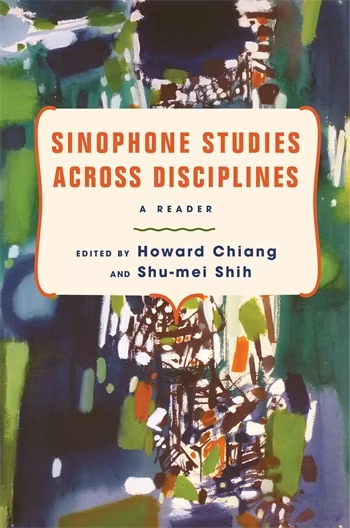
Prof. Howard Chiang, the Lai Ho & Wu Cho-liu Endowed Chair in Taiwan Studies, has a new book out—Sinophone Studies across Disciplines: A Reader, edited with Shu-mei Shih, from Columbia University Press. Congratulations!

Description

Sinophone studies—the study of Sinitic-language cultures and communities around the world—has become increasingly interdisciplinary over the past decade. Today, it spans not only literary studies and cinema studies but also history, anthropology, musicology, linguistics, art history, and dance. More and more, it is in conversation with fields such as postcolonial studies, settler-colonial studies, migration studies, ethnic studies, queer studies, and area studies.

This reader presents the latest and most cutting-edge work in Sinophone studies, bringing together both senior and emerging scholars to highlight the interdisciplinary reach and significance of this vital field. It argues that Sinophone studies has developed a distinctive conceptualization of power at the convergence of different intellectual traditions, offering new approaches to questions of plurality, hierarchy, oppression, and resistance. In so doing, this book shows, Sinophone studies has provided valuable conceptual tools for the study of minoritized and racialized communities in diverse global settings. Essays also consider how the rise of China has affected Sinophone communities and the idea of Chineseness around the world, among other timely topics. Showcasing cross-fertilization and diversification that traverse and transcend conventional scholarly boundaries, Sinophone Studies Across Disciplines gives readers an unparalleled survey of the past, present, and future of this inherently interdisciplinary field.

Table of Contents

Introduction: Sinophone Studies Across Disciplines, by Howard Chiang and Shu-mei Shih
Part I: Interdisciplinary Conjunctions
1. The Question of Chinese Empire, by Shu-mei Shih
2. Stonewall Aside: When Queer Theory Meets Sinophone Studies, by Howard Chiang
3. Written Out: Dance and the Sinophone, by Emily Wilcox
4. Cantonese Opera and Sino-Soundscape in North America, by Nancy Yunhwa Rao
5. Ann Hui, Hainan, and the Sino-Vietnamese War: A Sinophone Inter-Asian Recasting of Boat People’s Transpacific Refugee Critique, by Brian Bernards
6. Sinophone Affects: Kyle Dargan’s Anagnorisis and the Poetics of Infrastructure in Chan Tze Woon’s Yellowing, by Lily Wong
Part II: Theories, Methodologies, Controversies
7. Geocritical Sinophone and Transgressive Community, by Yinde Zhang
8. Sinophone Postloyalism, by David Der-wei Wang
9. Parasite: Conceptualizing a Sinophone Approach and Ethics, by E. K. Tan
10. Queer Hong Kong as a Sinophone Method, by Alvin K. Wong
11. Enjoy Your Sinophone!, by Chien-heng Wu
12. The Lure of Diaspora and Sinophone Malaysian Literature in Taiwan, by Wai-Siam Hee
13. Conditions of Theory in Taiwan: Americanism and Settler Colonialism, by Shu-mei Shih
Part III: Places of Differentiation
14. Chinese Settler Colonialism: Empire and Life in the Tibetan Borderlands, by Carole McGranahan
15. Beyond Musical, Political, and Linguistic Boundaries: The Influence of the Hong Kong Rock Band Beyond in the PRC in the 1990s and Its Legacy, by Nathanel Amar
16. Translanguaging as a Transcultural Marker in the Italian Sinophone Play Tong Men-g, by Valentina Pedone
17. From Multilingualism to Mandarin: Chinese Singaporeans as a Sinophone Community, 1945–1990, by Jason Lim
18. Adaptation and Identity Building Among the Ethnic Chinese Communities in Vietnam: A View from Ritual Transformation in Popular Religion, by Tho Ngoc Nguyen
19. The Misconstrued Reader: Contemporary Sinophone Literature in Thailand, by Rebecca Ehrenwirth
Contributors
Index

Jin Young Lim publishes new book The Dao of Flow

Announcement:

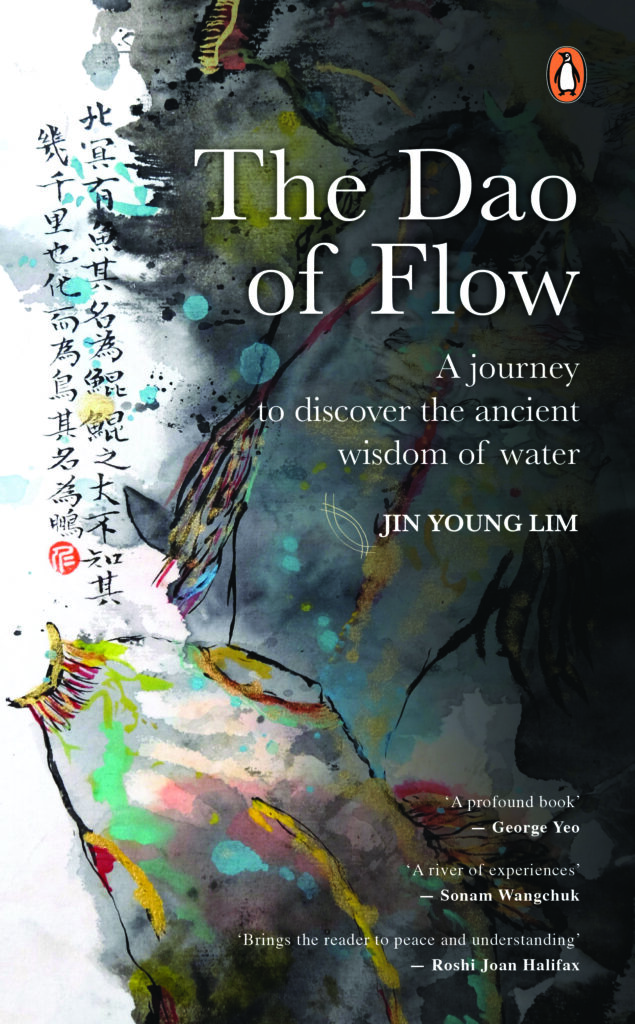
New Book Announcement! The Dao of Flow: A Journey to Discover the Ancient Wisdom of Water by Jin Young Lim, PhD student at the Department of East Asian Languages and Cultural Studies, is now published by Penguin Books! For more information about the book or to pre-order, check out Amazon!

About the Book:

Jin Young Lim was studying ancient philosophy when he delved into a philosophical investigation of his life to date – from his humanitarian work in Fukushima to studying in Tokyo, becoming a yoga teacher and Taijiquan instructor, and co-founding a non-profit in the Himalayas before moving to Beijing as a Schwarzman Scholar. Along the way, Jin Young met scholars, teachers, artists, philosophers, farmers, social workers, and spiritual leaders. In this book, he weaves classical texts into his experiences with Taijiquan, Daoism and Zen, tea, agriculture, conservation, art, history, geography, politics, and social economics. He captures his physical, intellectual, and spiritual journey in a series of incisive reflections, vignettes, and anecdotes that make it accessible in simple terms. Through these stories, Jin Young constructs a philosophical framework of Daoist principles that he calls ‘The Dao of Flow’ ― a way of continuous transformation based on embodying, flowing, and regulating water. These same three principles recurred as patterns in the lives of his role models or ‘walking flowers’ – those who ‘walk the flow’ and do so beautifully and naturally like flowers. This book is an invitation to discover the wisdom of water and provides readers with a novel spiritual map to deeper harmony with oneself and the world.

Fullbright Logo banner

Natalya Rodriguez Receives Fulbright U.S. Student Award for 2024-2025

Fullbright Logo banner

We are pleased to announce that Natalya Rodriguez, a doctoral student in EALCS, has received a Fulbright U.S. Student Program award to conduct her dissertation research, “Threatened Threads: Weaving Values in Heritage Textile Production in Okinawa, Japan,” while affiliating with the University of the Ryukyus for the 2024-2025 academic year. Congratulations, Natalya!

The photo shows the face of a person with brown skin and shoulder-length, dark brown hair. The person is in front of bookshelves and is smiling.

Flyer for "Humanities Decanted - Presenting New Publications and Creative Projects by HFA Faculty" on May 14th at 4PM in McCune conference room

Humanities Decanted 5/14: Thomas Mazanec in conversation with Xiaorong Li

Please join us for an in-person conversation between EALCS Professors Thomas Mazanec and Xiaorong Li about Mazanec’s new book, Poet-Monks: The Invention of Buddhist Poetry in Late Medieval China. The event, sponsored by the Interdisciplinary Humanities Center, will take place at 4pm on May 14, 2024, in HSSB 6020. Refreshments will be served.

Banner for "UCSB Graduate Student Conference: Research on East Asia" on May 18th and 19th in HSSB 4041

Graduate Student Conference: Research on East Asia (May 18-19, HSSB 4041)

On May 18-19, 2024, we will host the “UCSB Graduate Student Conference: Research on East Asia,” organized by EALCS grad students Meagan Finlay and Hanne Deleu, featuring presentations by UCSB grad students across several departments, as well as a keynote speech by English Department professor (and EALCS affiliate) Yunte Huang.

The full program may be found here. Please join us!

Japanese Language Lecturer in the East Asian Languages and Cultural Studies Department

Job #JPF02763
East Asian Languages and Cultural Studies / College of Letters & Science – Humanities and Fine Arts / UC Santa Barbara
Apply now: https://recruit.ap.ucsb.edu/JPF02763/apply
View this position online: https://recruit.ap.ucsb.edu/JPF02763

POSITION OVERVIEW
Salary range: See Table 15 for the salary range for this position. A reasonable estimated full-time rate for this position at 100% time is $66,259-$72,404.
Percent appointments may vary.
Percent time: 100%
Anticipated start: July 1, 2024

APPLICATION WINDOW
Open date: May 2, 2024
Next review date: Thursday, May 23, 2024 at 11:59pm (Pacific Time)
Apply by this date to ensure full consideration by the committee.
Final date: Sunday, Jun 30, 2024 at 11:59pm (Pacific Time)
Applications will continue to be accepted until this date, but those received after the review date will only be considered if the position has not yet been filled.

POSITION DESCRIPTION
The Department of East Asian Languages and Cultural Studies at the University of California, Santa Barbara invites applications for a full-time Lecturer in Japanese Language. The successful candidate will be expected to teach Japanese language courses at all levels (elementary through advanced) and to work closely with the program coordinator to prepare course materials, to supervise teaching assistants, and to organize program-related events. This is a full-time, benefits-eligible appointment for the 2024-2025 academic year with possibility of renewal contingent upon satisfactory performance, availability of resources, and the needs of the program.

Candidates must be legally authorized to work in the United States without the need for employer sponsorship.

The University is especially interested in candidates who can contribute to the diversity and excellence of the academic community through research, teaching,
and service as appropriate to the position

QUALIFICATIONS
Basic qualifications (required at time of application)
– MA in Japanese language pedagogy, applied linguistics, linguistics, or a related field, at the time of application.

Additional qualifications (required at time of start)
– Two years of experience in higher education, preferably in the United States, teaching Japanese language courses (elementary through advanced levels),
and evidence of effective teaching.
– Native/near-native proficiency in both Japanese and English, as evidenced through application materials.

APPLICATION REQUIREMENTS
Document requirements
– Curriculum Vitae – Your most recently updated C.V.
– Cover Letter
– Statement of Teaching
– Statement of Teaching Effectiveness – Quantitative data and samples of qualitative data from teaching evaluations.
– Sample Syllabi – Sample syllabi for at least two different levels of language instruction.

– One Lesson Plan – One lesson plan for one unedited video of classroom language teaching or a recording of a class delivered by remote instruction.
Please upload the video to SNS such as YouTube and include a video link in the lesson plan.

Reference requirements
– 3 letters of reference required
Applicants should provide the names and contact information for 3 references and must request letters of reference within the system in order to complete
application requirements.

Apply link: https://recruit.ap.ucsb.edu/JPF02763
Help contact: rebeca_adam@ucsb.edu

ABOUT UC SANTA BARBARA
The University of California is an Equal Opportunity/Affirmative Action Employer. All qualified applicants will receive consideration for employment without regard to race, color, religion, sex, sexual orientation, gender identity, national origin, disability, age or protected veteran status. For the University of California’s Affirmative Action Policy please visit: https://policy.ucop.edu/doc/4010393/PPSM-20. For the University of California’s Anti-Discrimination Policy, please visit: https://policy.ucop.edu/doc/1001004/Anti-Discrimination.

As a condition of employment, you will be required to comply with the University of California Policy on Vaccination Programs, as may be amended or revised from time to time. Federal, state, or local public health directives may impose additional requirements.

JOB LOCATION
Santa Barbara, CA