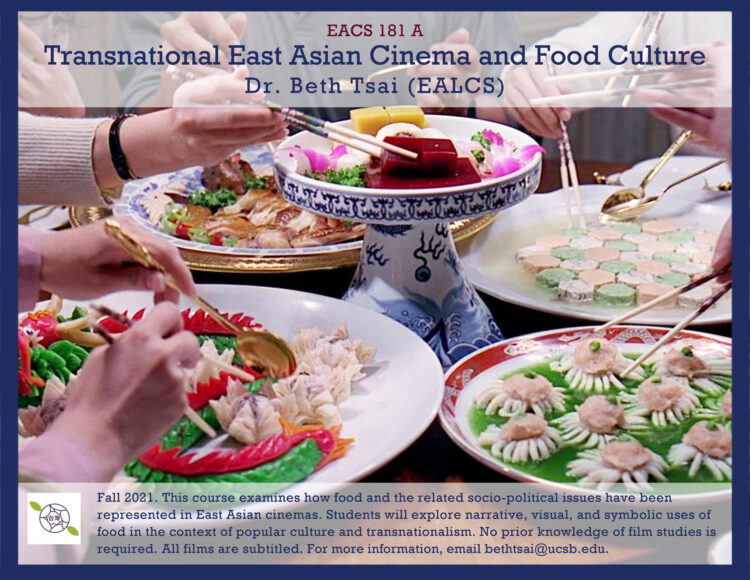
Text describing a course, over an image of several hands holding chopsticks, grabbing food from shared dishes. The text at top reads: EACS 181 A: Transnational East Asian Cinema and Food Culture. Dr. Beth Tsai (EALCS)." Text on bottom reads: "Fall 2021. This course examines how food an the related socio-political issues have been represented in East Asian cinemas. Students will explore narrative, visual, and symbolic uses of food in the context of popular culture and transnationalism. No prior knowledge of film studies is required. All films are subtitled. For more information, email bethtsai@ucsb.edu."

Two New Courses for Fall 2021

This fall, we will be introducing two new courses, both of which are taught by our new colleague, Dr. Beth Tsai (Visiting Assistant Professor of Taiwan Studies).

  • EACS 181A: Transnational East Asian Cinema and Food Culture
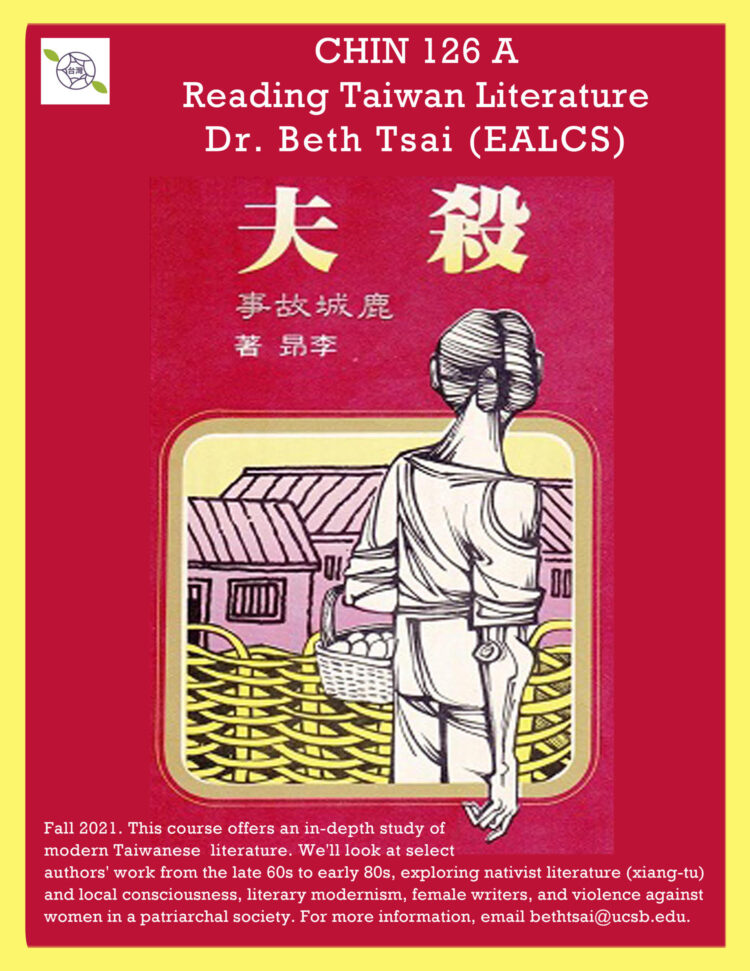
  • CHIN 126A: Reading Taiwan Literature

Please see the flyers below for more details.Text describing a course, over an image of several hands holding chopsticks, grabbing food from shared dishes. The text at top reads: EACS 181 A: Transnational East Asian Cinema and Food Culture. Dr. Beth Tsai (EALCS)." Text on bottom reads: "Fall 2021. This course examines how food an the related socio-political issues have been represented in East Asian cinemas. Students will explore narrative, visual, and symbolic uses of food in the context of popular culture and transnationalism. No prior knowledge of film studies is required. All films are subtitled. For more information, email bethtsai@ucsb.edu."

Gold border, red background. Image of a woman standing, facing away, holding a basket and looking at a village. Text at top reads: "CHIN 126 A: Reading Taiwan Literature. Dr. Beth Tsai (EALCS). Several lines in Chinese that give the title and author of a book. Text at bottom reads: "Fall 2021. This course offers an in-depth study of modern Taiwanese literature. We'll look at select authors' work from the late 60s to early 80s, exploring nativist literature (xiang-tu) and local consciousness, literary modernism, female writers, and violence against women in a patriarchal society. For more information, email bethtsai@ucsb.edu."

A close-up photo of Marie Kondo with eyes closed, head slightly bowed, and palms clasped together

Kaitlyn Ugoretz’s Op-Ed on Marie Kondo Featured in Washington Post

A close-up photo of Marie Kondo with eyes closed, head slightly bowed, and palms clasped together
Our very own Kaitlyn Ugoretz‘s op-ed on Marie Kondo has been featured in the Washington Post. Her piece is an insightful analysis into tidiness guru Marie Kondo’s spiritual eclecticism, and what it can tell us about Japanese religion more generally.
Congratulations, Kaitlyn!
Unhappy woman giving a thumbs down and holding a book

“The Worst Chinese Poetry” featured in The Current

“The Worst Chinese Poetry” event organized by Thomas Mazanec, Xiaorong Li, and Hangping Xu has been featured in the Current, UCSB’s general news outlet. Read the story here: https://www.news.ucsb.edu/2021/020304/lyrical-losers
An excerpt:
“By calling something ‘good,’ you are drawing a line, saying some things are good, some are bad,” Mazanec said. “That line was drawn differently in different times and different places. There are all sorts of considerations that go into drawing that line: aesthetic, moral, social and political standards that change with time. By investigating these standards, we can learn a lot about Chinese literary history.”
Fabio and Rory instruments

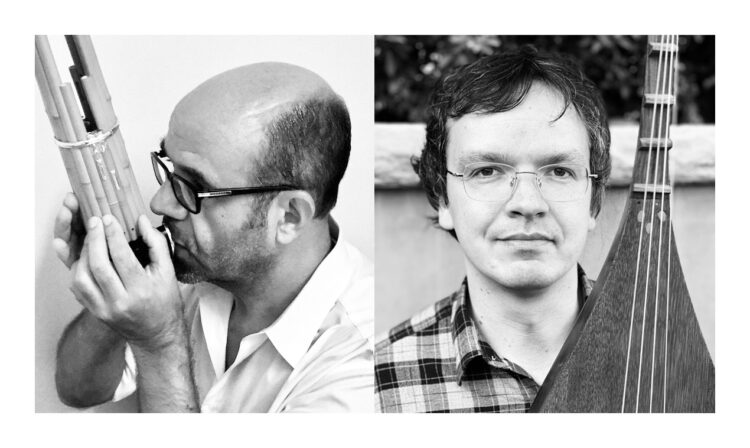
Fabio Rambelli’s Music Featured in The Current

Prof. Fabio Rambelli in The Current on “Neo Arche,” his collaborative digital album with ancient instruments used in Gagaku, the 1,000-year-old music of Japan’s Imperial Court:
“I think that the music we were able to create and its sound is pretty amazing — soothing and sometimes solemn but also full of depth and energy,” Rambelli said. “We wanted to use the ritual sensibility and solemnity of Gagaku but set it in a more introspective and domestic environment, something that would sooth and reinvigorate at the same time.”
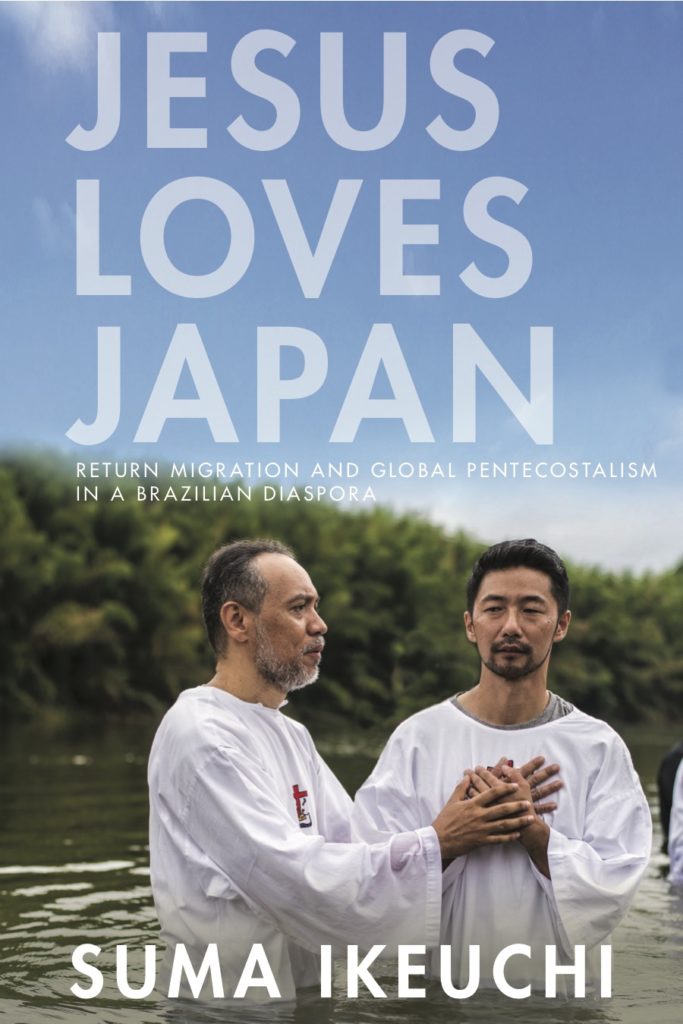
Jesus Loves Japan book cover by Suma Ikeuchi

Suma Ikeuchi Wins Francis L. K. Hsu Book Prize for Jesus Loves Japan

Our newest faculty member, Assistant Professor Suma Ikeuchi, has just been awarded the Francis L. K. Hsu Prize for the best book in the anthropology of East Asia by the American Anthropological Association’s Society of East Asian Anthropology. The prize is named for the late Francis L.K. Hsu (1909-2000), renowned cross-cultural anthropologist and former president (1977-78) of the American Anthropological Association. Book submissions from all four fields of anthropology as they relate to East Asia, as well as books that venture beyond standard ethnographic modes of writing are considered for this prestigious prize. Professor Ikeuchi is the first in the history of the Department and UC Santa Barbara to receive this prize.

Professor Ikeuchi’s book is titled Jesus Loves Japan: Return Migration and Global Pentecostalism in a Brazilian Diaspora (Stanford University Press, 2019). Here is the prize committee’s citation:

In this remarkable book, Suma Ikeuchi presents a captivating ethnography of Japanese Brazilians (Nikkei) at the intersection of Asian return migration and Latin American Pentecostalism. Situated in the factories, neighborhoods, and churches of Toyota City, Aichi Prefecture, Ikeuchi’s study explains how the political, economic, and psychological dimensions of mobility and belonging shape this transnational community and its increasing number of Pentecostal converts. Although Christians account for only about 1% of Japan’s population, the emphasis on religion in this book is crucial for understanding the specific community it seeks to depict and also significantly expands the analytical approach to studying Asian return migration beyond the more common ethnoracial categories of identity and belonging. The book is accessibly and elegantly written, but it does not shy away from complexity. Ikeuchi worked with and among a group that is truly “betwixt and between” in terms of the contradictions of race, nation, religion, and even social class in Japan. The multiple intellectual frameworks required to make sense of the ethnographic situation, and the author’s ability to pursue and explain it with great detail, intimacy, analytical precision, and coherence, are a testament to its anthropological contribution beyond Asian Studies.

Congratulations, Prof. Ikeuchi, on this magnificent achievement!