Collage of various pictures during travel

Winni Ni Awarded Takashima Graduate Student Grant

Every year, the Koichi Takashima Graduate Student Grant is given to one of the most promising graduate students in Japanese Cultural Studies. This year, Winni Ni impressed the selection committee with her pursuit of an exceptionally innovative and theoretically sophisticated dissertation titled, “Forms of Relating –The Representation of Intersubjectivity in Contemporary Border-crossing Literature (ekkyō bungaku) in Japan.” Border-crossing literature by contemporary authors who are non-native Japanese speakers, she writes, is commonly known for its polyphonic texts. Scholars have argued that authors create polyphonic texts to mirror and express the multi-lingual identities that resist being pinned down to any given category. This dissertation proposes to radically rethink border-crossing literature by focusing on the representation of relationships between the self and others within a community. Ni examines the narrative’s representations of ways of relating in various border-crossing contexts, exploring how the characters’ self-perceptions are co-constructed with other subjects in the present and in the past. She asks how border-crossing literature represents that process of co-construction using specific rhetorical forms and linguistic expressions, and how it creates a body of knowledge of intersubjective encounters across social, cultural, and linguistic boundaries.
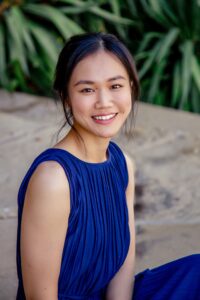
Winni Ni headshot
Winni Ni. Photo Credit to SJP Photography

Through close readings of the border-crossing fictions by Yang Yi (b. 1964), On Yūjū (b. 1980), and Sagisawa Megumu (1968–2004), Ni aims to elucidate the literary rendering of self-emergence through constant and dynamic exchanges with others. She argues that border-crossing literature provides an alternative cultural notion of happiness—one that is grounded in mutual recognition, psychological belonging, and trust. Border-crossing literature achieves this by representing moments of mutual recognition as transformative, enlivening, and deeply pleasurable: they are what the narratives and the characters return to again and again, through highly stylized plots and affectively engaging expressions. Combining literary analysis with psychological and social theories of self-formation, Ni intends to open up new perspectives on Japanese border-crossing literature and to encourage others to use these polyphonic narratives to imagine how individuals could live with their explicit differences—better and together.


A close-up photo of Marie Kondo with eyes closed, head slightly bowed, and palms clasped together

Kaitlyn Ugoretz’s Op-Ed on Marie Kondo Featured in Washington Post

A close-up photo of Marie Kondo with eyes closed, head slightly bowed, and palms clasped together
Our very own Kaitlyn Ugoretz‘s op-ed on Marie Kondo has been featured in the Washington Post. Her piece is an insightful analysis into tidiness guru Marie Kondo’s spiritual eclecticism, and what it can tell us about Japanese religion more generally.
Congratulations, Kaitlyn!

Japanese Language Placement Test for Fall’21


The application period for the placement test Fall’21 has closed. Please check back in November 2021 for the dates of the next Japanese Placement Test in Winter 2022.

If you have any questions, please contact Yoko Yamauchi (yokoy@eastasian.ucsb.edu)

How to prepare for the Placement Test
Review the materials (textbooks) of the course(s) you have taken before. We recommend to review verb and adjective conjugations as well as vocabulary and kanji. Please refer to the course description (Japanese Language Course Description) for more information about the each level of our Japanese courses. If you have a certain course you wish to start, look at the description of the course prior to the placement test. A course description indicates what you are expected to be able to do to take the course you wish to take.

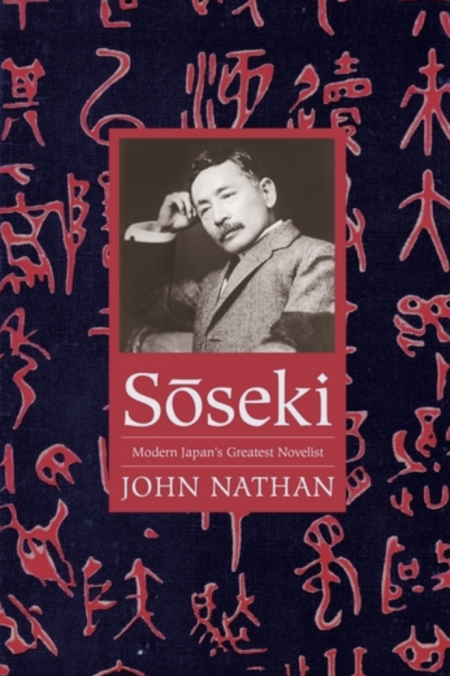
Sōseki, Modern Japan's Greatest Novelist by John Nathan book cover

“Sōseki” Modern Japan’s Greatest Novelist by Professor John Nathan

Prof. John Nathan published his new book, Sōseki” Modern Japan’s Greatest Novelist from Columbia University Press.

In this biography, John Nathan provides a lucid and vivid account of a great writer laboring to create a remarkably original oeuvre in spite of the physical and mental illness that plagued him all his life. He traces Sōseki’s complex and contradictory character, offering rigorous close readings of Sōseki’s groundbreaking experiments with narrative strategies, irony, and multiple points of view as well as recounting excruciating hospital stays and recurrent attacks of paranoid delusion. Drawing on previously untranslated letters and diaries, published reminiscences, and passages from Sōseki’s fiction, Nathan renders intimate scenes of the writer’s life and distills a portrait of a tormented yet unflaggingly original author. The first full-length study of Sōseki in fifty years, Nathan’s biography elevates Sōseki to his rightful place as a great synthesizer of literary traditions and a brilliant chronicler of universal experience who, no less than his Western contemporaries, anticipated the modernism of the twentieth century.

Full article available here:

Columbia University Press

https://cup.columbia.edu/book/sseki/9780231171427

Iwanami Shoten releases Japanese translation of Prof. John Nathan’s memoir “Living Carelessly in Tokyo and Elsewhere”

On November 22, 2017, Iwanami Shoten (岩波書店) published 日本放浪記 (Nippon hoorooki), the Japanese translation of John Nathan’s 2008 memoir, Living Carelessly in Tokyo and Elsewhere.

From best-selling novelist Mizumura Minae’s  comment on the cover of the Japanese edition:

“This is a tale of one man’s ambition, his disappointments, and his loves, and is at the same time an invaluable chronicle of Japan’s postwar literary community. Unflaggingly fascinating!”

Praise from American critics:

“In narrating the events of his life, in its ups, downs and (predominantly) swerves, Nathan brings a talent for characterization, a splendid ability in scene setting, and an acute power of dramatizing incidents…His portrait of his stormy relationships with strong personalities, such as Mishima, Shintaro Katsu, and Sony chairman Norio Ohga are pointed and insightful, often yielding memorable moments…an enthralling read.”(Evergreen Review, 2008)

“Nathan is a practiced storyteller. “Living Carelessly” is an engaging chronicle of his passionate lifelong involvement with Japan.  It offers a vivid picture  of Japanese culture from someone who infiltrated it intimately…”Living Carelessly” is also a candid confessional portrait of a man so driven to prove his artistic talents (to himself and to others) that his achievements in several realms fail to satisfy him. Yet as this memoir makes clear, his achievements, while falling short of his dreams–whose don’t?–add up to more than he thinks.”  (Los Angeles Times Book Review, March 30, 2008).