Congratulations to Winni Ni, who has been selected as an Engaging Humanities Fellow for Summer 2021! Over the course of the summer, Winni will participate in seminars focused on teaching and research in the humanities. All best wishes, Winni, for a stimulating and inspiring fellowship summer!
Category: Announcement

Suma Ikeuchi Wins Francis L. K. Hsu Book Prize for Jesus Loves Japan
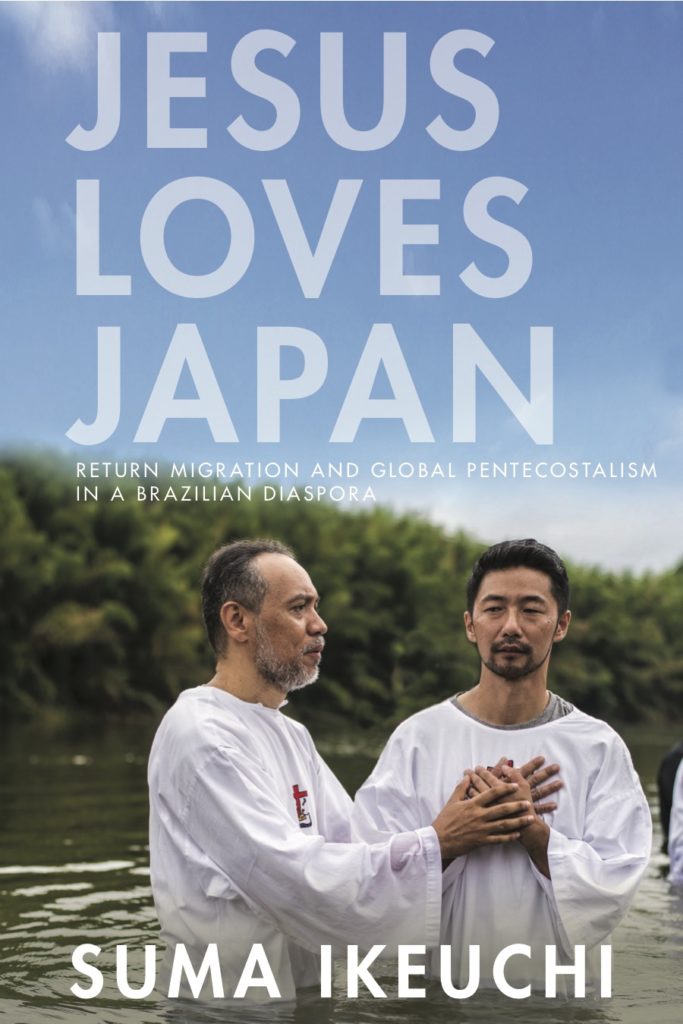
Our newest faculty member, Assistant Professor Suma Ikeuchi, has just been awarded the Francis L. K. Hsu Prize for the best book in the anthropology of East Asia by the American Anthropological Association’s Society of East Asian Anthropology. The prize is named for the late Francis L.K. Hsu (1909-2000), renowned cross-cultural anthropologist and former president (1977-78) of the American Anthropological Association. Book submissions from all four fields of anthropology as they relate to East Asia, as well as books that venture beyond standard ethnographic modes of writing are considered for this prestigious prize. Professor Ikeuchi is the first in the history of the Department and UC Santa Barbara to receive this prize.
 Professor Ikeuchi’s book is titled Jesus Loves Japan: Return Migration and Global Pentecostalism in a Brazilian Diaspora (Stanford University Press, 2019). Here is the prize committee’s citation:
In this remarkable book, Suma Ikeuchi presents a captivating ethnography of Japanese Brazilians (Nikkei) at the intersection of Asian return migration and Latin American Pentecostalism. Situated in the factories, neighborhoods, and churches of Toyota City, Aichi Prefecture, Ikeuchi’s study explains how the political, economic, and psychological dimensions of mobility and belonging shape this transnational community and its increasing number of Pentecostal converts. Although Christians account for only about 1% of Japan’s population, the emphasis on religion in this book is crucial for understanding the specific community it seeks to depict and also significantly expands the analytical approach to studying Asian return migration beyond the more common ethnoracial categories of identity and belonging. The book is accessibly and elegantly written, but it does not shy away from complexity. Ikeuchi worked with and among a group that is truly “betwixt and between” in terms of the contradictions of race, nation, religion, and even social class in Japan. The multiple intellectual frameworks required to make sense of the ethnographic situation, and the author’s ability to pursue and explain it with great detail, intimacy, analytical precision, and coherence, are a testament to its anthropological contribution beyond Asian Studies.
Congratulations, Prof. Ikeuchi, on this magnificent achievement!
News: Disability Studies Initiative
Please read below to learn about the new Disability Studies Initiative, co-organized by our very own Prof. Hangping Xu.
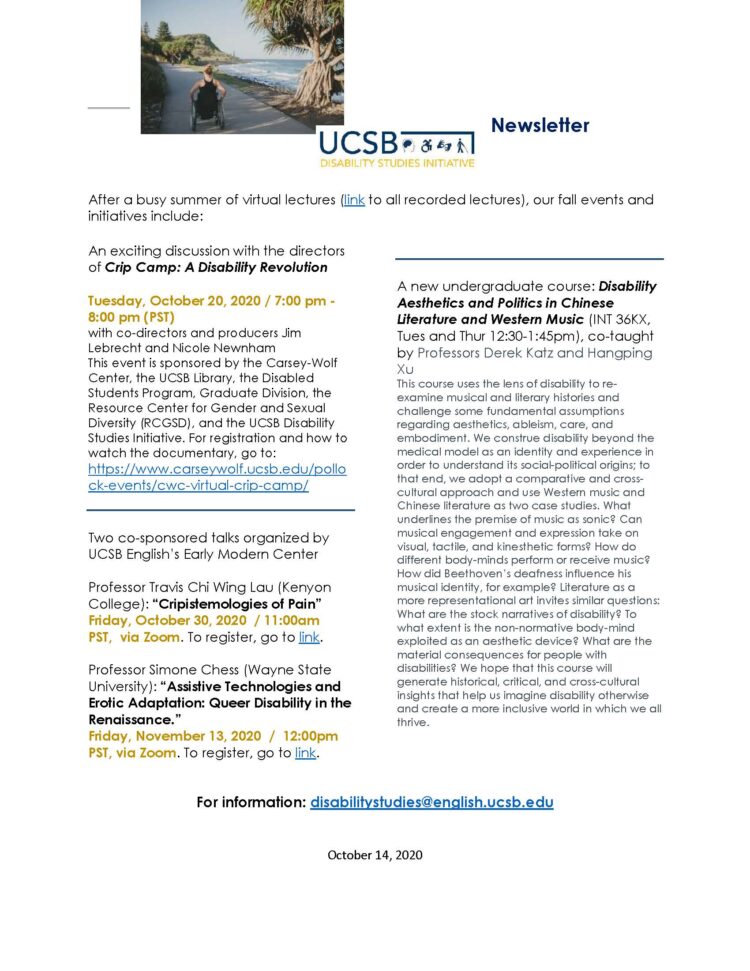 DisabilityStudies_Newsletter_10.13.2020
Click on the image for a PDF with working hyperlinks.
Fall 2020 Newsletter Released
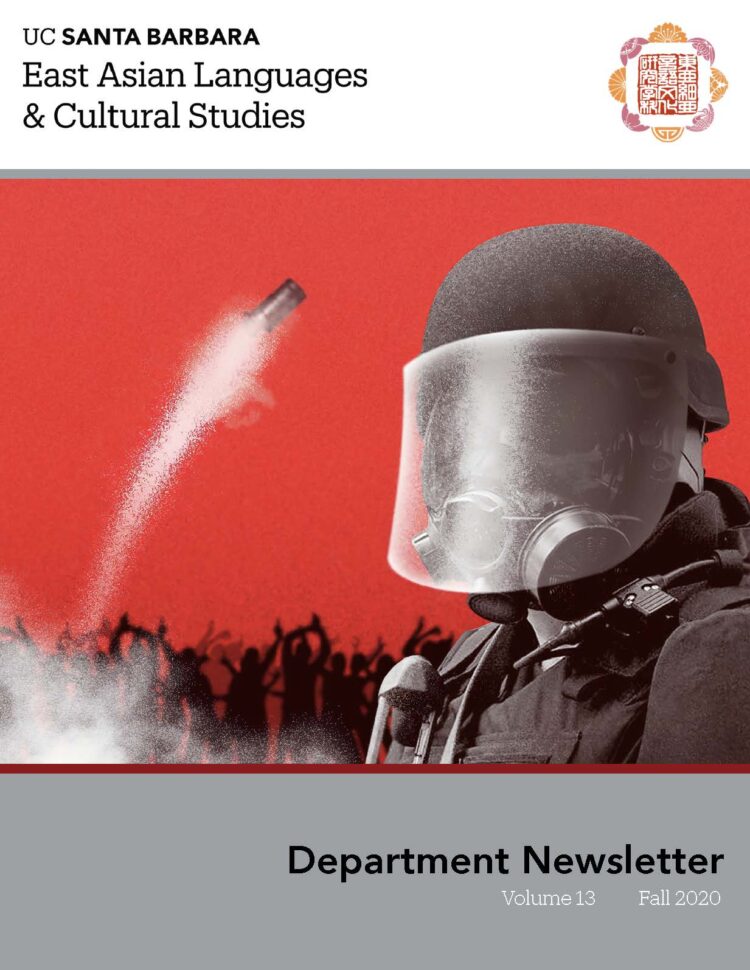
We are pleased to announce the publication of our Fall 2020 Newsletter (vol. 13). In addition to reports from the programs and centers that are associated with the Department, we are proud to present two new faculty members, reflections on major academic and artistic events, our wonderful undergraduate and graduate students’ achievements, and our faculty members’ accomplishments along with numerous other contributions.
East Asia Center’s Online Speaker Series Announced
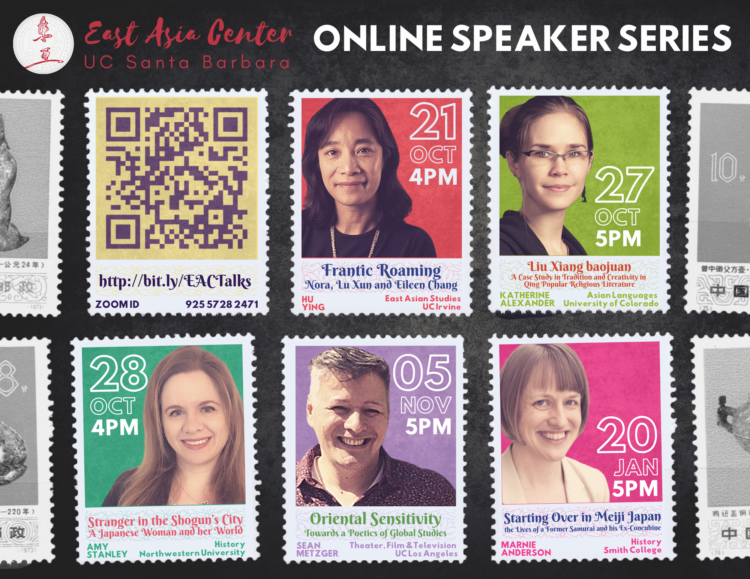
The East Asia Center has announced its Online Speaker Series from October 2020 through January 2021. Please join us for these virtual events!
Call for Papers: The Worst Chinese Poetry: A Virtual Workshop
The Worst Chinese Poetry: A Virtual Workshop
April 5–9, 2021
Organized by Thomas Mazanec, Xiaorong Li, and Hangping Xu
Call for Papers
Good poems are all alike, but every bad poem is bad in its own way. Poems may fail according to aesthetic, formal, political, social, moral, and other criteria. There are failures of innovation and imitation, of quantity and quality, of ambition and cowardice. The purpose of this virtual workshop is to explore what was thought to be the very worst poetry written in Chinese and to understand why it was regarded so poorly. We want to know who considered it bad, and according to what criteria. By examining the “worst” poetry and the harshest judgments on it from antiquity to the present, we hope to offer a literary history as seen through failure.
The workshop will introduce and discuss primary texts that address the question of why a poem might be called “bad.” Participants are invited to submit up to 10 pages (inclusive of English translation) of “bad” Chinese poetry or critical writings on it from any historical period, accompanied by 5–10 pages (1250–2500 words) of critical introduction. Texts should highlight important moments in the history of bad poetry and how they relate to aesthetic, political, social, and conceptual norms. During the workshop, participants will meet on Zoom for several half-days to discuss the contributions.
Our definition of badness is broad. The awkward, the ugly, the wild, the immoral, the vulgar, the boring, the didactic, the unusual—all may be considered bad. Poetry that’s good in one context is often bad in another. Some topics that participants may wish to consider addressing include (but are not limited to):
- canon formation
- genre theory
- religious poetry
- misinterpreted poetry
- translated poetry
- internet poetry
- imitative or intertextual poetry
- licentious or decadent poetry
- poetry by political toadys or turncoats
- poetry by emperors and governors (looking at you, Qianlong!)
- poetry by non-Chinese or diaspora poets
- poetry by women, workers, merchants, monks, and all varieties of non-literati
- poetry in novels, plays, stories, and other kinds of literary works
Contributions will be collected, reviewed, and edited for publication as part of The Worst Chinese Poetry: A Critical Anthology. Abstracts of up to 250 words describing a Chinese text and its relevance to bad poetry are due by October 15, 2020. Full contributions will be due January 31, 2021. The workshop will convene the week of April 5–9, 2021.
Inquiries and proposals may be submitted to the organizers, Thomas Mazanec (mazanec@ucsb.edu), Xiaorong Li (lixiaor@ucsb.edu), and Hangping Xu (hangping@ucsb.edu).